
Distal biceps tendon ruptures, also called avulsions or tears occur when the biceps tendon pulls off the bone in the forearm. This is common in men undertaking forceful activities with their elbow or forearm. When it occurs, there is often a popping sensation or sound from the elbow region followed by pain and quickly the arm feels weaker with swelling and bruising. If this occurs it is important that the injured person rapidly be assessed medically and have an ultrasound or MRI to confirm the injury, as treatment should be considered urgently.
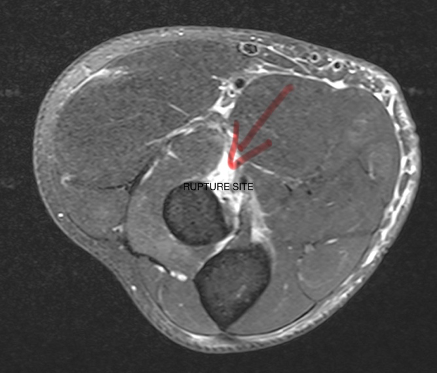
An MRI showing the tendon pulled off the radius bone in the forearm
After a few weeks the swelling, bruising and typically the pain disappears. However, there is a change in the shape of the biceps muscle in the arm and a noticeable reduction in elbow and forearm strength and endurance which will not improve with time. Most people find these symptoms unacceptable and therefore rather than accepting the reduced function most people will choose to have their distal biceps tendon avulsions repaired surgically.
To repair the tendon an incision is made, and the end of the tendon is located. Often the tendon has retracted many centimetres into the arm – most surgical techniques use an incision of reasonable length or more than one incision to retrieve the tendon. However, I developed a technique using a telescope to retrieve the tendon from the arm with a single small incision and using a small speculum retractor. The aim of this technique was to make the operation as safe, cosmetic and as comfortable a recovery as possible. I have presented my technique internationally and published it in 2023.
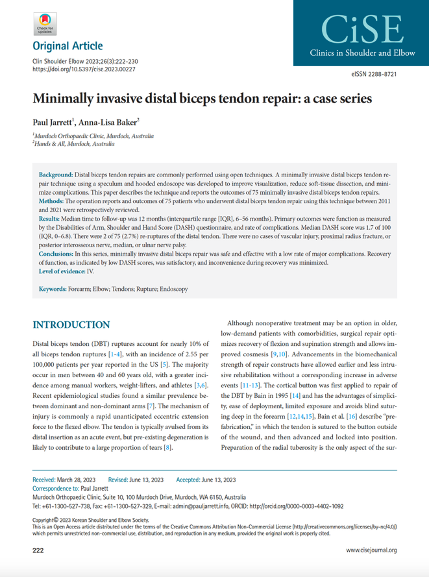
Cover page of the operation technique description and case series publication
Given our expertise in this injury, many patients attend with this injury and we undertake this repair for approximately 30 patients each year.
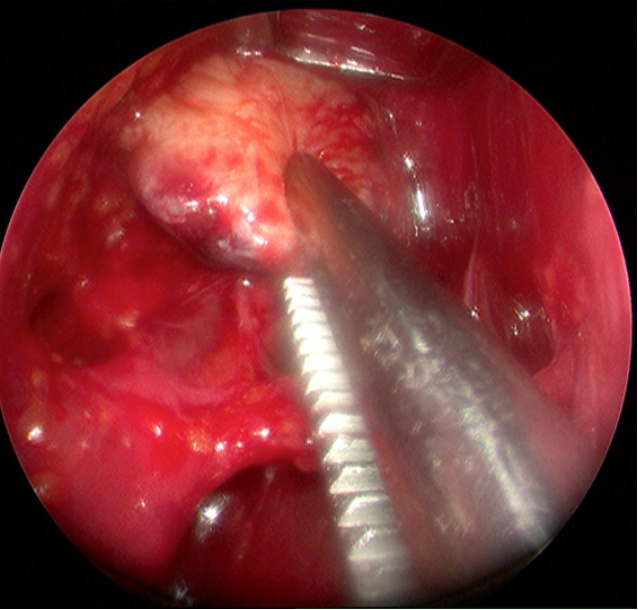
End of the tendon being retrieved from the arm via small single incision using telescope.
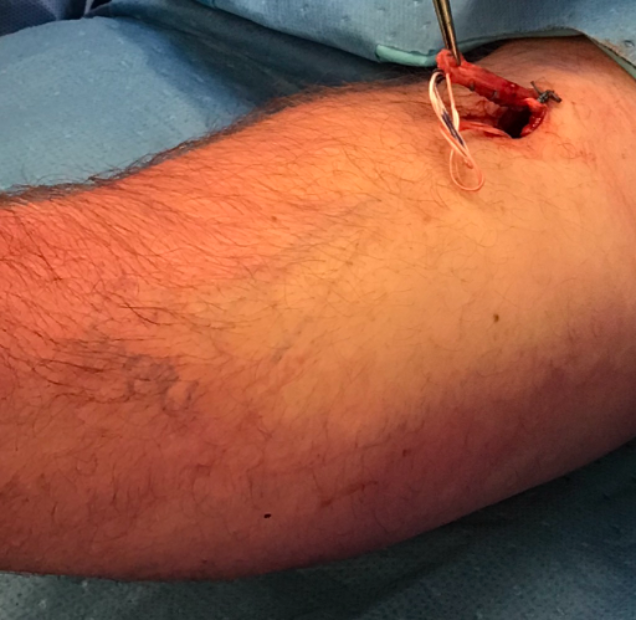
Distal biceps tendon having been retrieved from the arm and sutured into anchor placed in the radius bone.
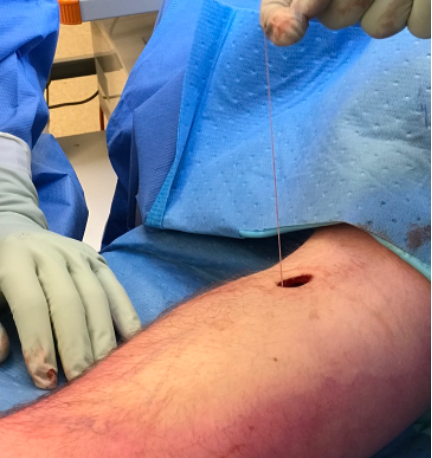
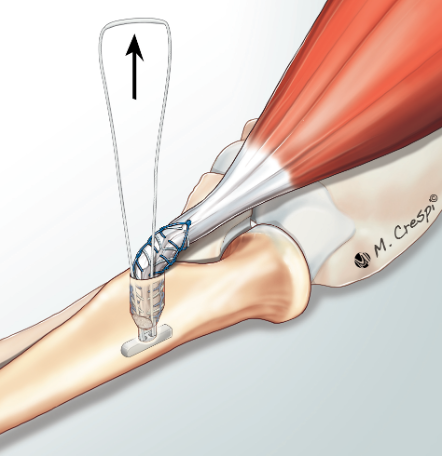
Pulling the suture brings the tendon onto the bone.
Following surgery, the way the elbow is rehabilitated is important to make the recovery from surgery as smooth and safe as possible. At our therapy clinic we have undertaken considerable work developing an evidence-based rehabilitation protocol which does not involve the use of splints or braces.
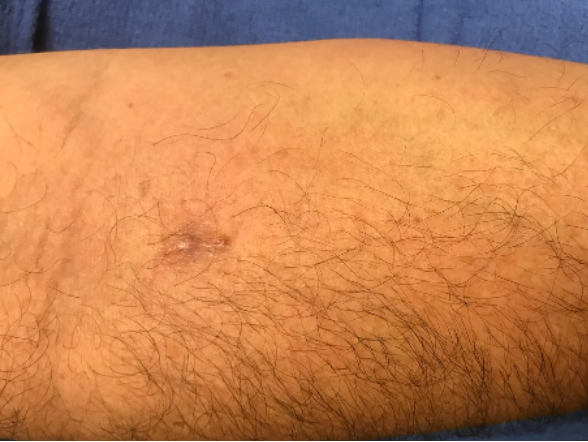
A healed distal biceps tendon repair incision (typically under 15 mm)
We carefully follow-up our distal biceps tendon repairs using our technique, including the use of PROMs (patient rated outcome measures) and to date 98% of patients’ tendons heal with a good functional recovery.
Paul Jarrett April 2026